Analog Friends 12: Kurashi no Gakkou on Architecture, Everyday Life, and Making Things Together
Hello, Analog Friends! This month, Yuka is interviewing Kurashi no Gakkou, a new Japanese brand we carry in the shop.
In this series on Cafe Analog’s blog, ANALOG FRIENDS, we invite you to enjoy long-form reading at a slower pace (preferably with a cup of coffee, tea, or chocolate!) while getting to know the people behind the products you love from Cafe Analog.
Enjoy!
***
Hello, Analog Friends! Yuka here!
This time, I had the pleasure of speaking with Kurashi no Gakkou, a Japanese brand we’re thrilled to welcome to Cafe Analog.
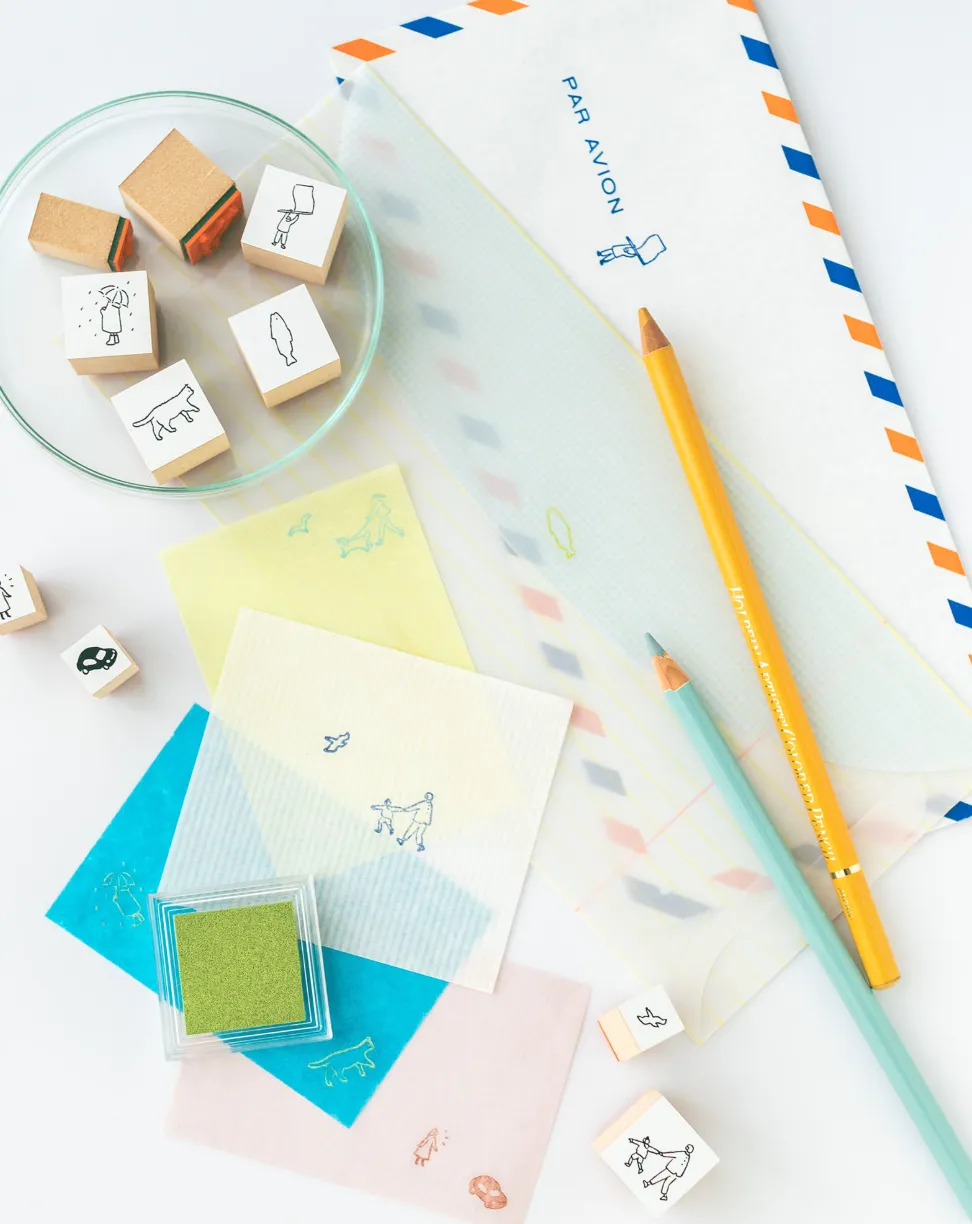
When we first discovered their stamps, we were immediately charmed by the tiny people in their illustrations, who look as if they have stepped right out of an everyday street scene. They were simply so cute and full of character!
But Kurashi no Gakkou is not simply a stationery brand. The project began with architecture.
Run by husband-and-wife team Misaki and Hiuta Kume, Kurashi no Gakkou explores ways to make architecture feel more approachable and enjoyable. Their work ranges from videos and audio content to ZINEs, stamps, and other paper goods.
Even their name reflects this idea: “Kurashi” means “everyday life” or “living,” while “Gakkou” means “school” in Japanese.
I spoke with Hiuta about how architecture became the starting point for Kurashi no Gakkou, how they develop ideas together, their love of books and traditional printing techniques, and the everyday scenes that inspire their charming stamps.
Yuka: Could you introduce yourselves? What kind of creative work do you usually do?
Kurashi no Gakkou:Nice to meet you! We work together under the name Kurashi no Gakkou to help people enjoy architecture in a more approachable way and discover its appeal.
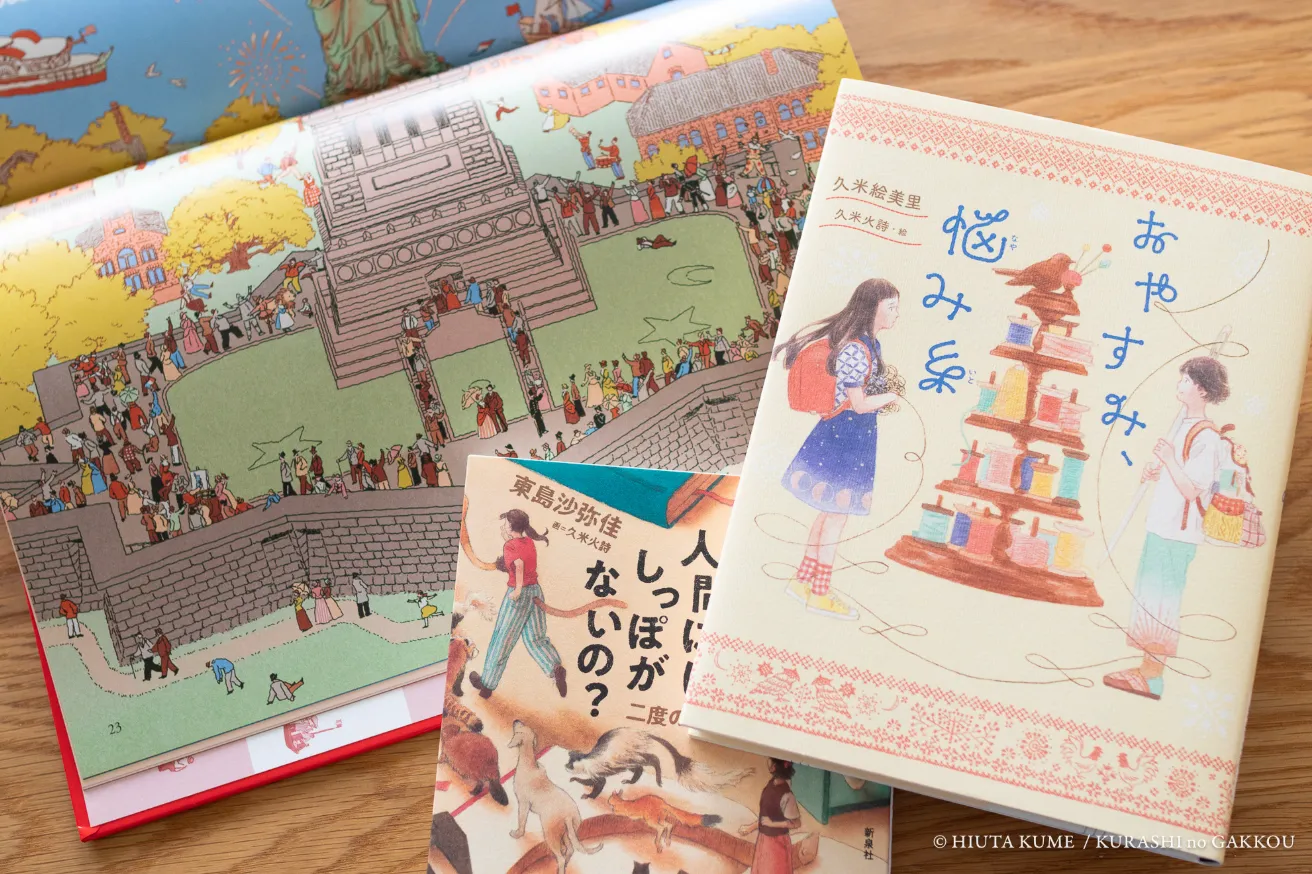
We are a husband-and-wife team: architect Misaki Kume and illustrator Hiuta Kume. Together, we create video and audio content for online media, as well as paper goods, mainly ZINEs and stamps.
Misaki primarily handles our online media, while I, Hiuta, focus mainly on paper goods.
Outside of Kurashi no Gakkou, Misaki works as an architect, mainly designing houses and shops. He also runs Kume Frame, a brand that creates picture frames using solid wood.
I work as an illustrator, creating illustrations for advertising, books, and other projects.
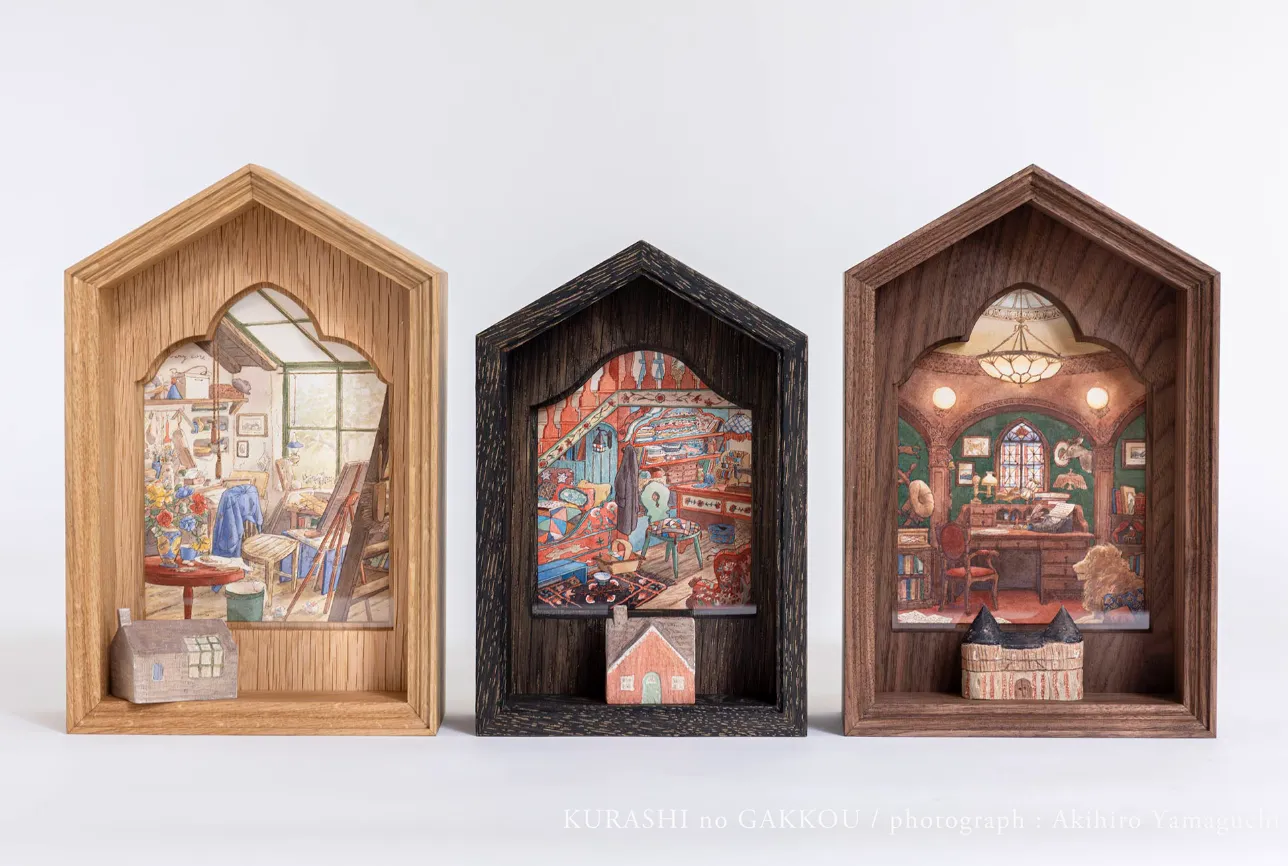
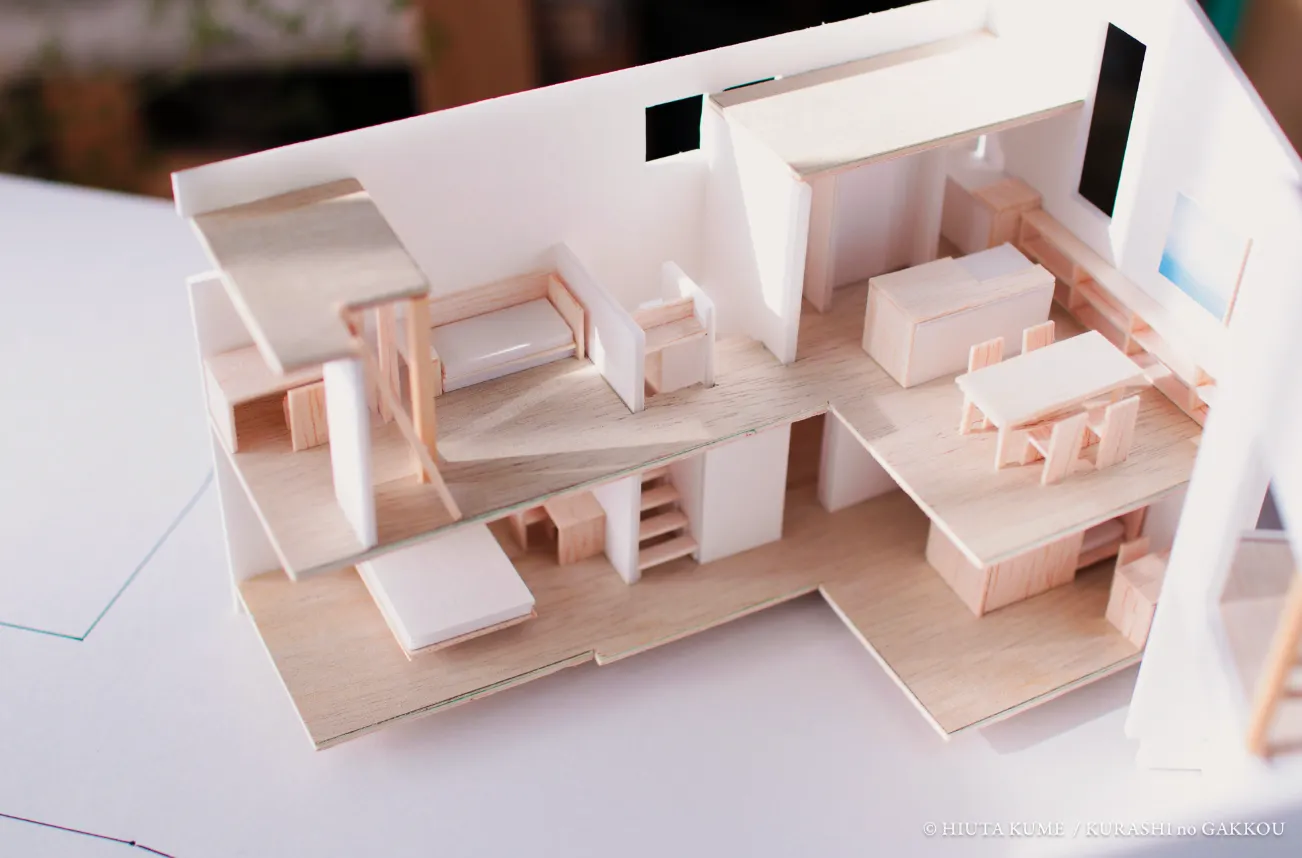
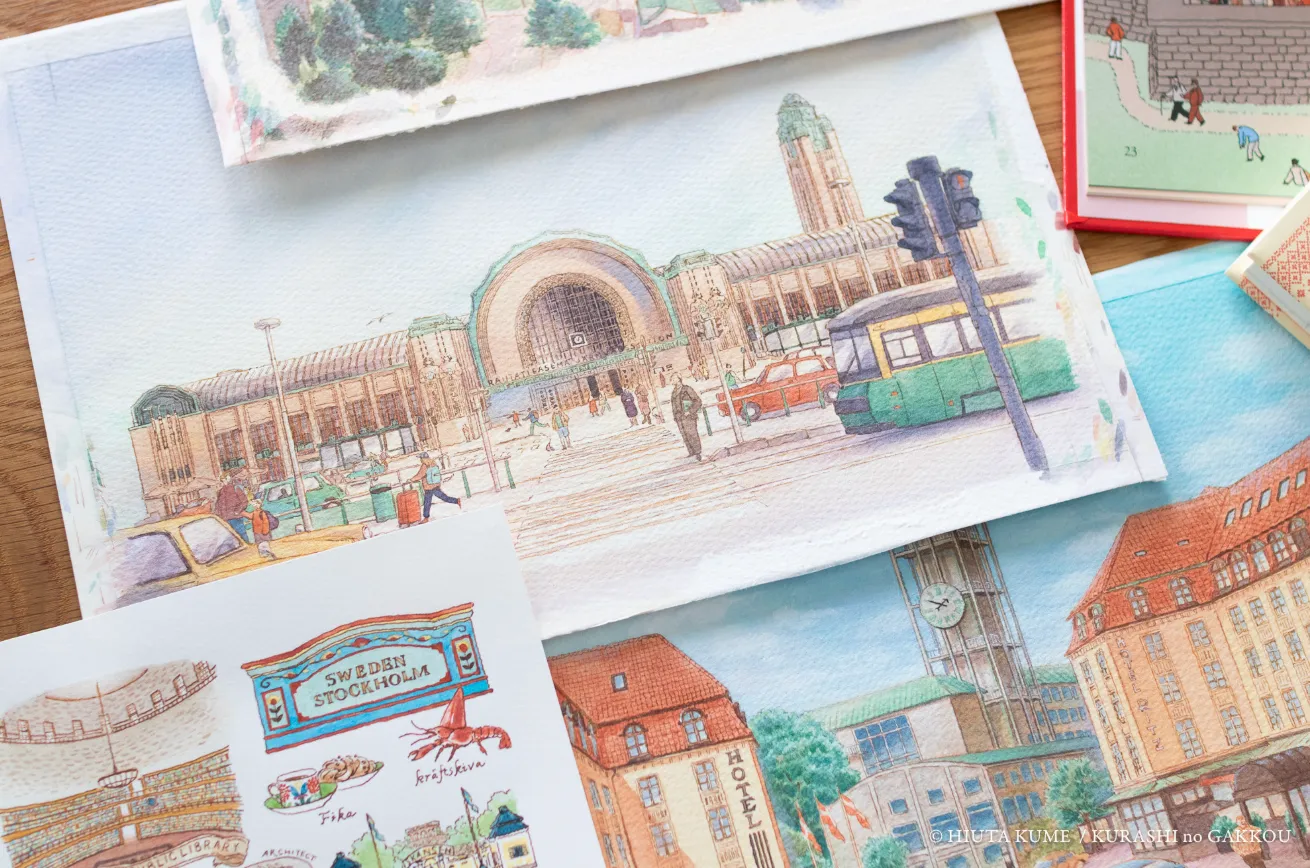
Yuka: What is the meaning or story behind the name “Kurashi no Gakkou”?
Kurashi no Gakkou: Misaki originally decided to become an architect after asking himself, “What could I do to make the streets and towns of Japan better?”
There is a limit to how many houses one architect can design alone. But he thought that if we could share examples of good architecture and more people came to appreciate and relate to them, perhaps that could eventually lead to more good architecture being created.
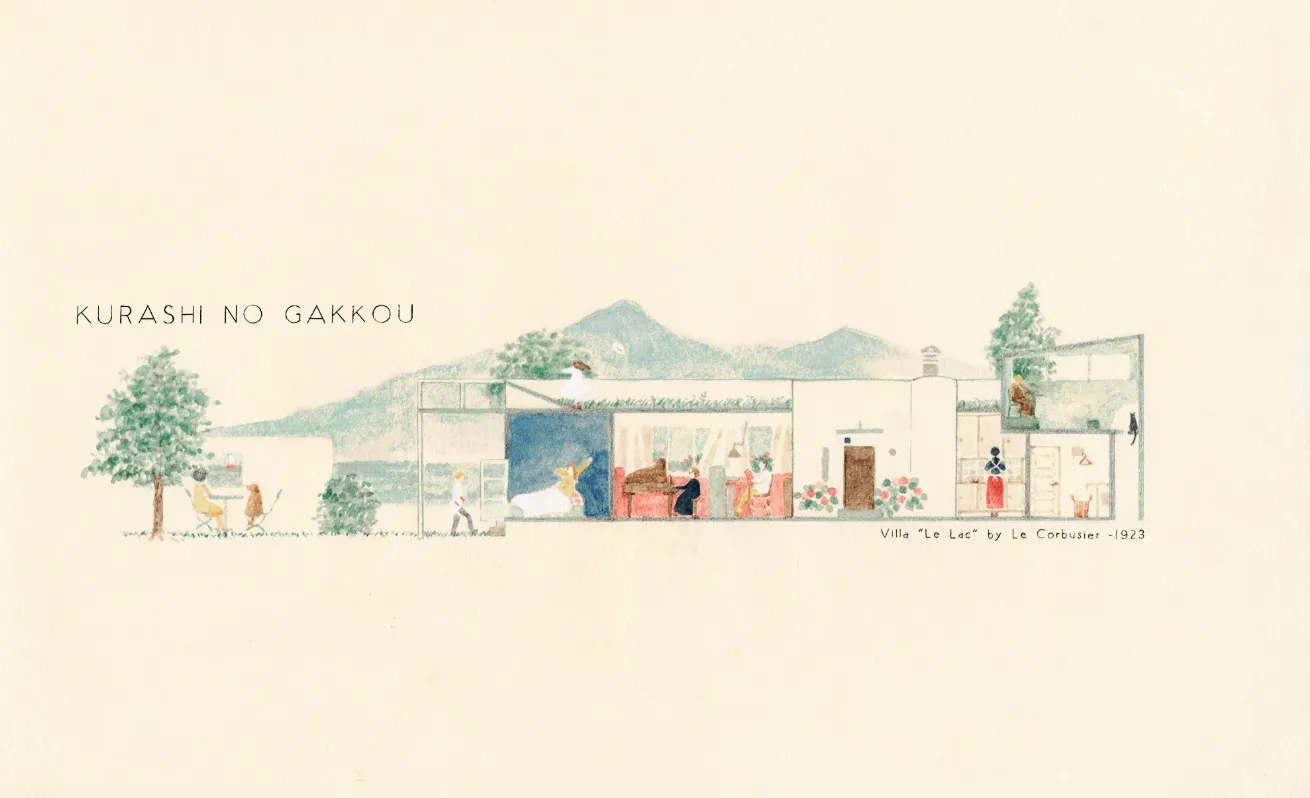
With that idea in mind, we created a place where we could introduce masterpieces of residential architecture and furniture from around the world, and named it “Kurashi no Gakkou.”
Yuka: What inspired you to start Kurashi no Gakkou and your creative activities together?
Kurashi no Gakkou: As we mentioned earlier, we had long wanted to introduce good architecture to more people.
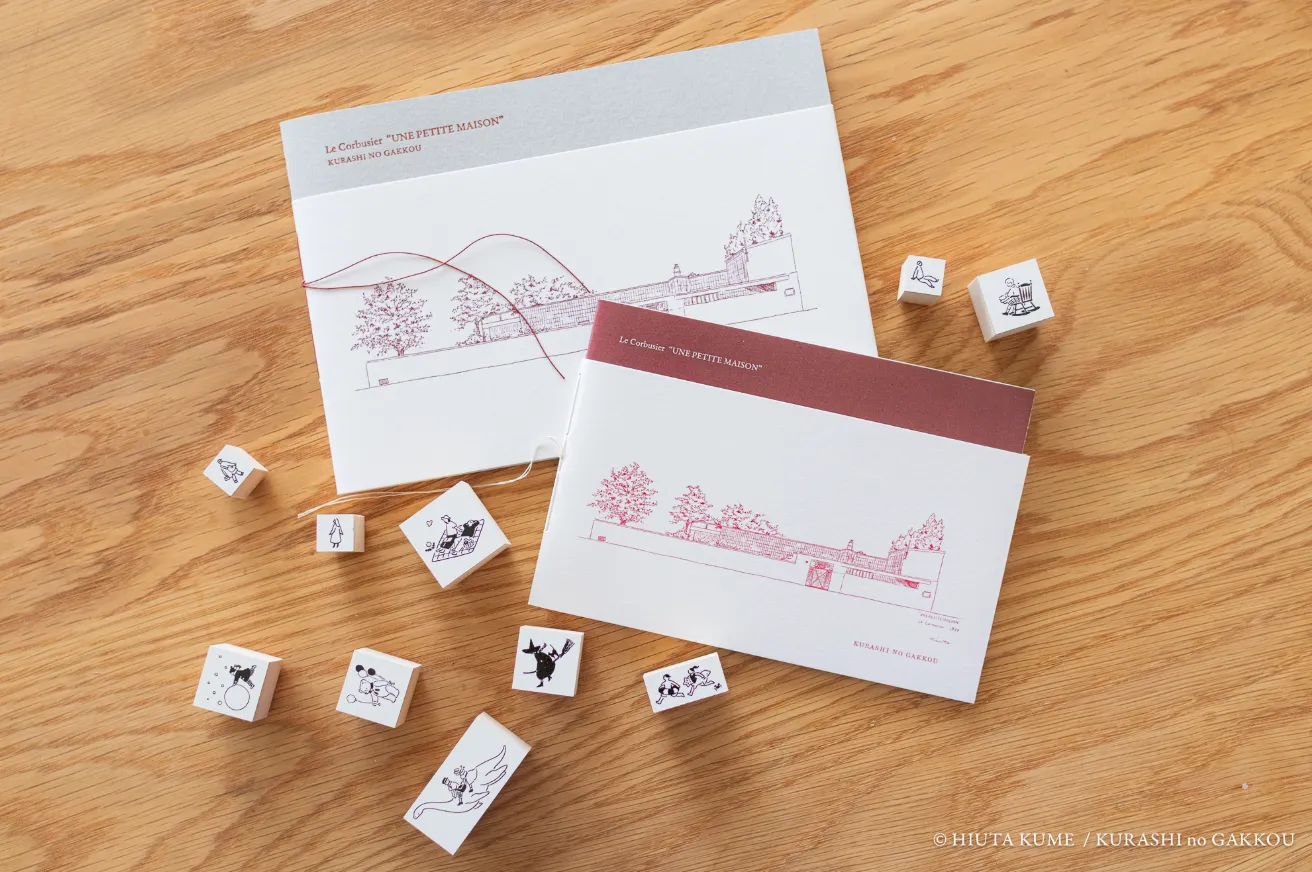
As one way of doing this, our activities began with a YouTube video introducing Le Corbusier’s Une Petite Maison.
Thankfully, many people watched it. As we continued making more videos, we eventually had the idea of re-editing the content into ZINEs, helped by the fact that we have both always loved books.
The first ZINE we made was a tiny B7-sized book that could fit in the palm of your hand.
As more people began picking up our books at events, we started creating paper goods as an even more casual and approachable way for people to become interested in architecture.
Yuka: Where do you usually find inspiration? Are there any favorite places you visit or daily routines that inspire your work?
Kurashi no Gakkou: One source of inspiration is reading.
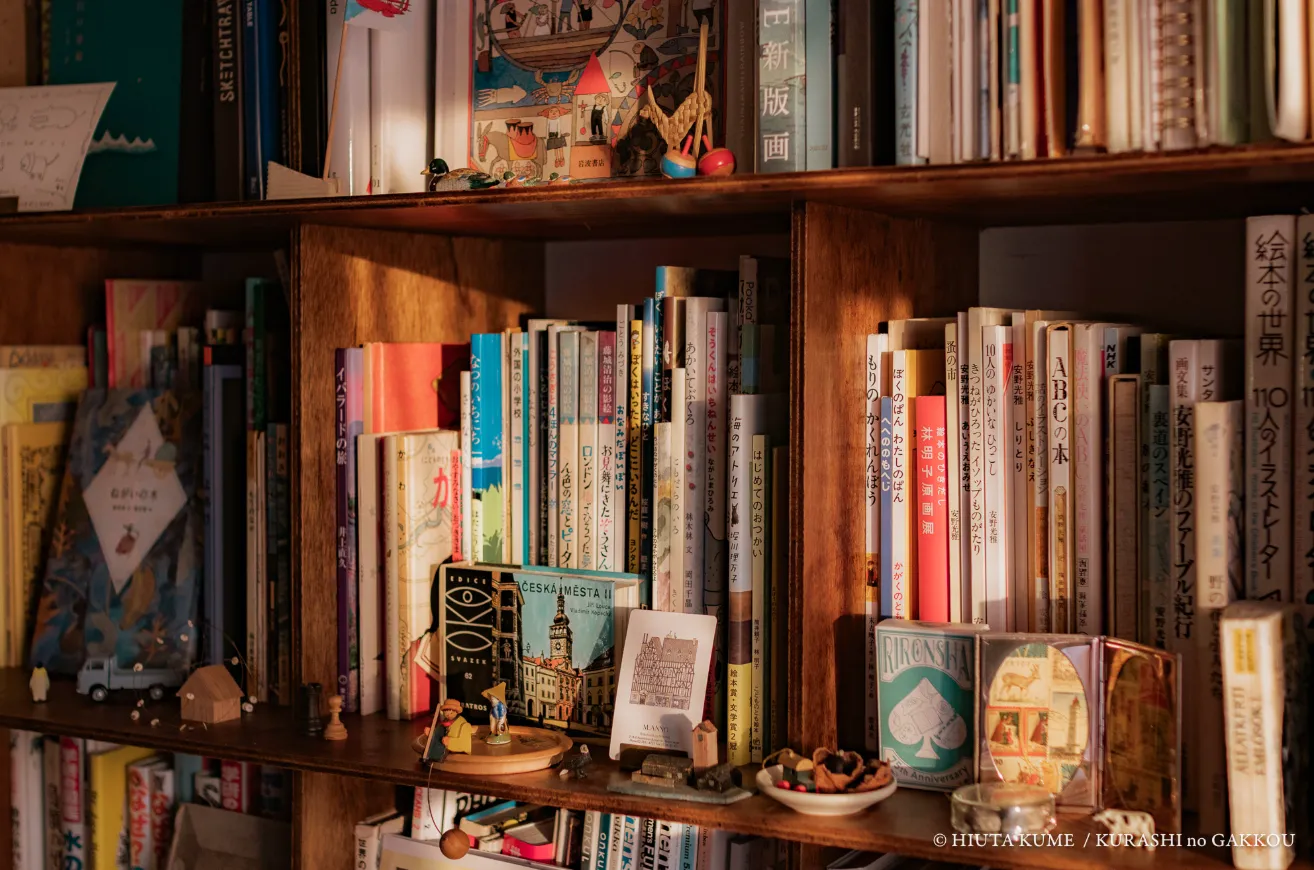
Books about architecture, novels, art books, photography books, picture books… We both love books very much, so our home is filled with them.
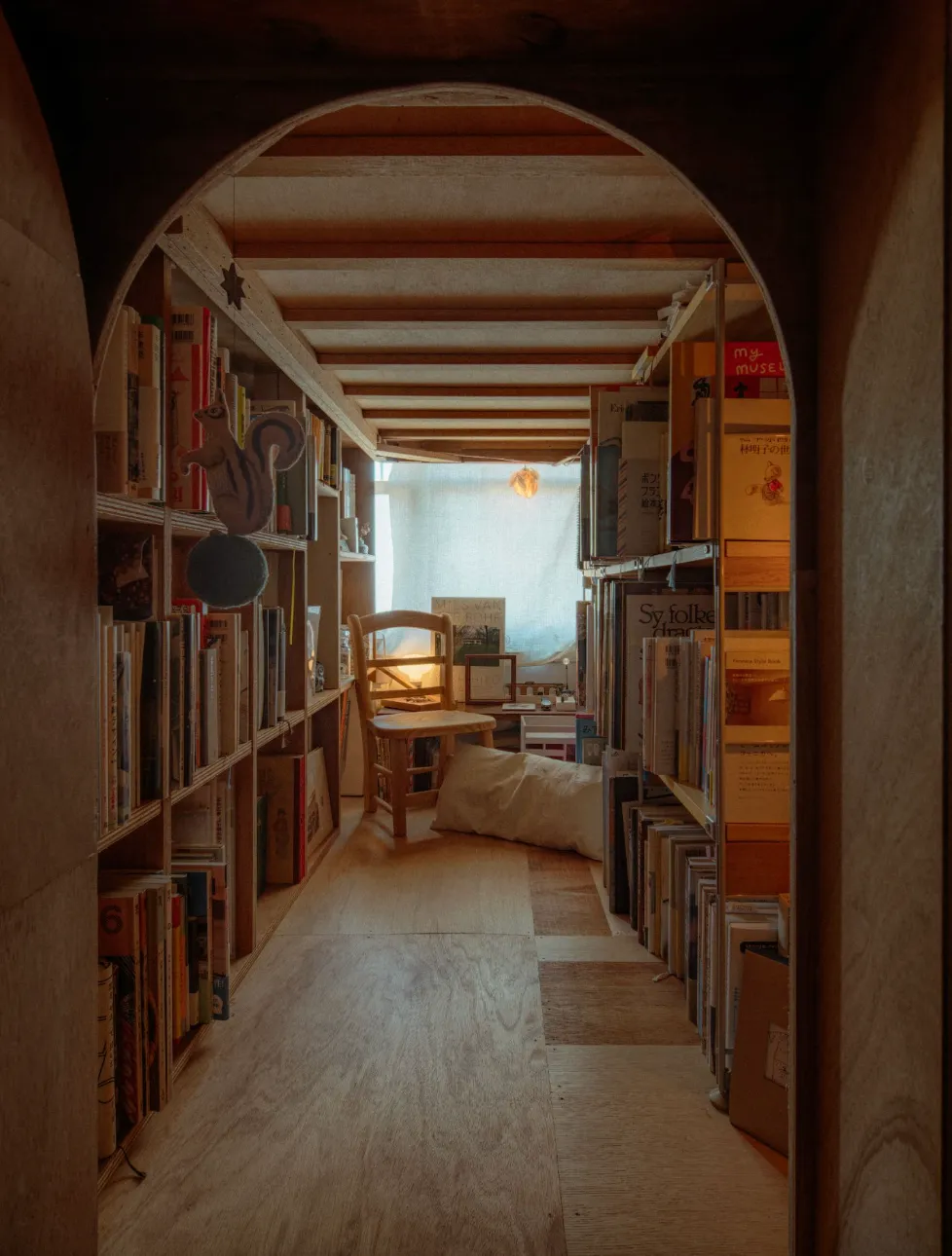
Our favorite place in the house is our little library. When you pass through an arched doorway, you enter a low-ceilinged, attic-like room with bookshelves covering both walls.
Old books and new books alike allow our imaginations to expand. We also find inspiration in the printing methods, paper, and textures used in the books themselves.
We love old furniture and toys as well, and sometimes these objects become starting points for new ideas.
We are based in Tokyo, Japan, but there is a large river near our home and a lot of nature around us, so we often go for walks nearby. During breaks from work, we might watch people passing by, the trees, or birds, and use what we see as references for our designs.
Even the most ordinary scenery can contain so many hints when you take the time to observe it closely.
When we walk through the city, we also pay attention to old architectural details and ornamentation. Whenever we come across a beautiful detail, we take a photograph and keep it as a seed for a future idea.
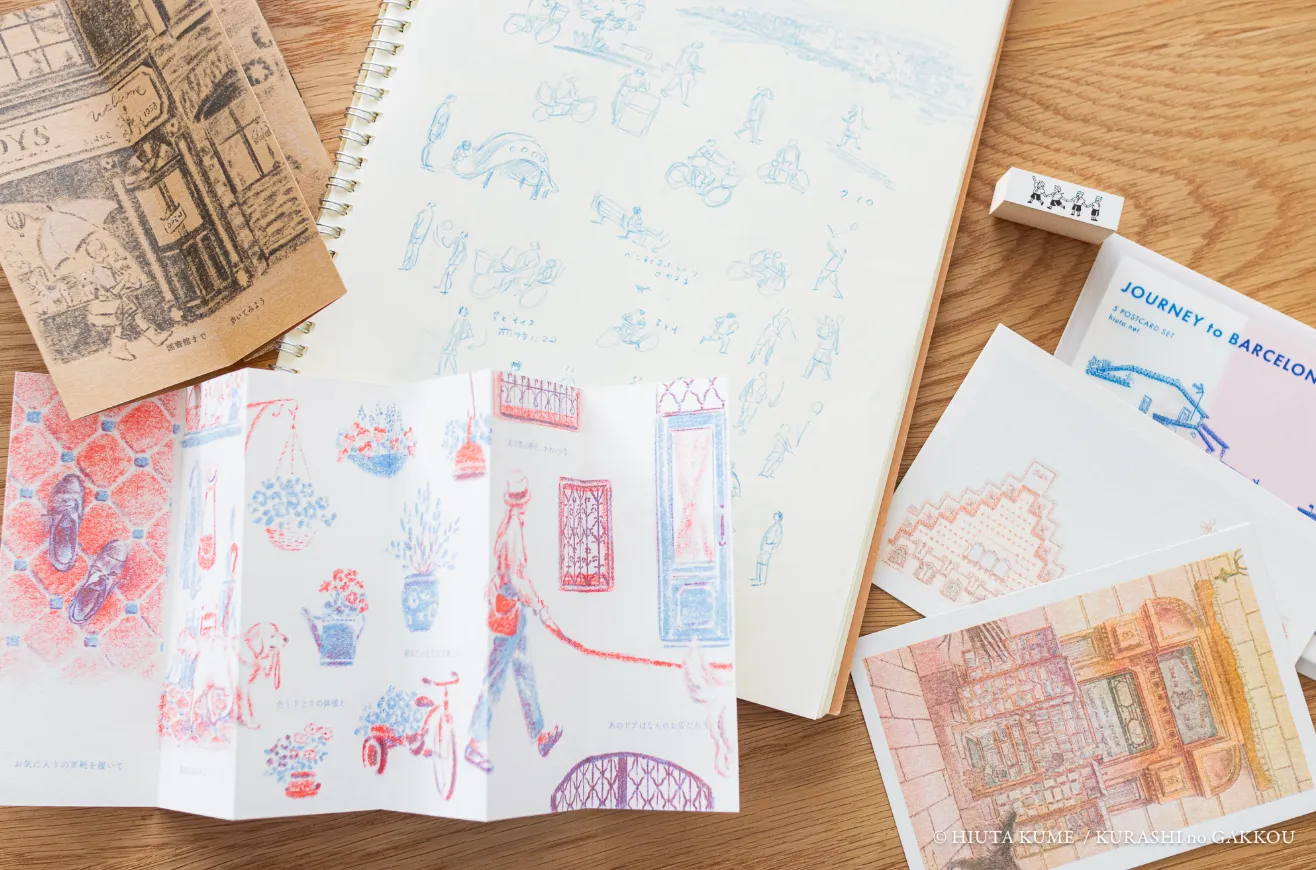
Yuka: Could you walk us through your creative process? What is important to you when designing your products?
Kurashi no Gakkou: We come up with ideas together.
In our everyday lives, we are always talking to each other about things that come to mind, or writing down ideas individually. When it is time to make something new, we bring those ideas together and discuss what we would like to create next.
For ZINEs and videos, Misaki usually writes the text first. We then edit and refine it together, and I add the illustrations.
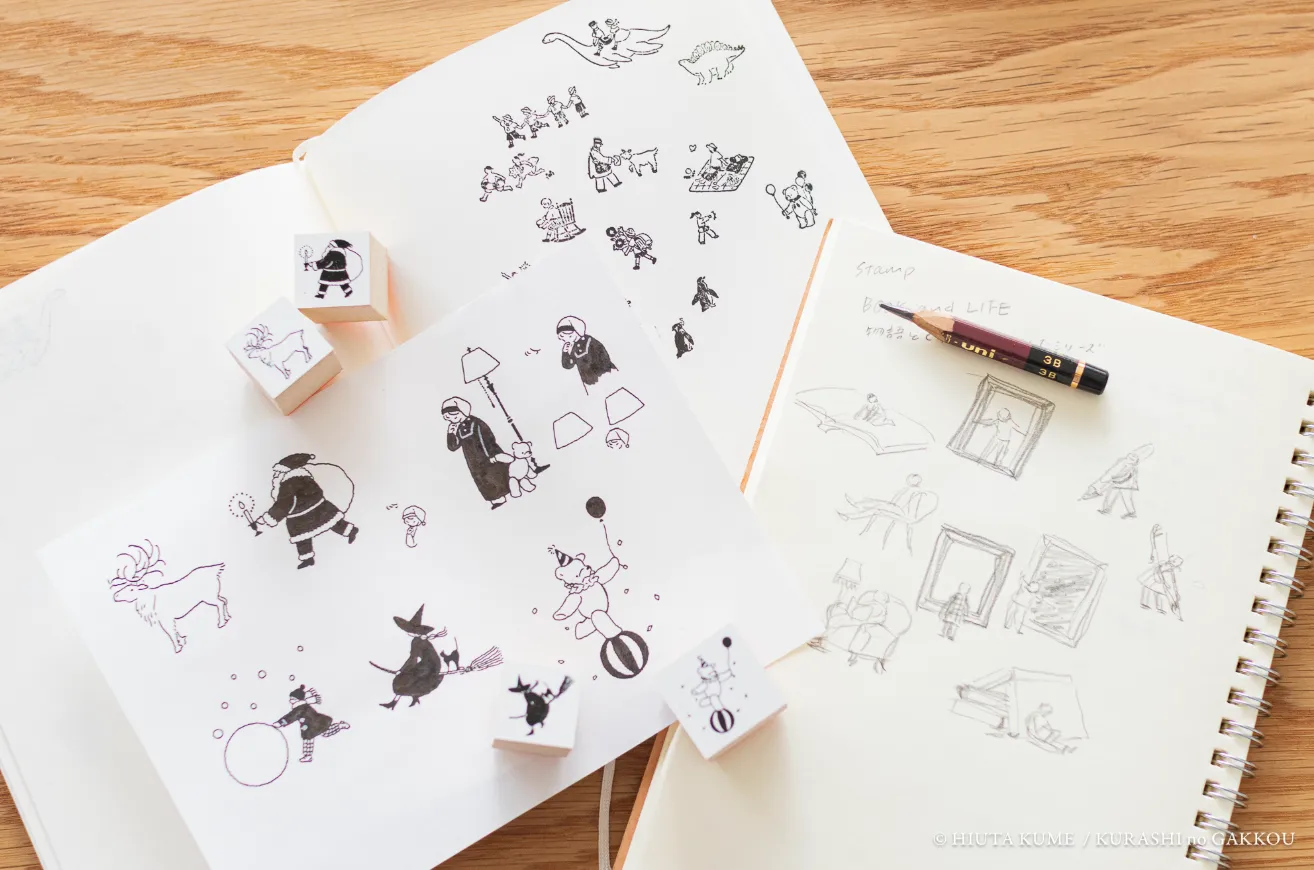
For paper goods, after discussing the idea together, I draw the initial sketches and then we continue refining them as a team.
When designing a product, what matters most to us is creating something that we genuinely believe is good and that we ourselves are satisfied with.
That may sound obvious, but when you become too conscious of trends and what is popular in the world, it can be easy for that sense of conviction to become unsteady.
Of course, we want the people who pick up our products to enjoy them. But before that, we carefully check everything to make sure that what we create is something we can send out into the world with confidence and responsibility.
I also love the textures of paper and printing, so we pay close attention to materials and try to avoid finishes that feel too easy or superficial.
By continuing to use and share the materials and printing techniques we ourselves love, we hope that, even in a very small way, we can help these traditions and cultures survive into the future.
Yuka: Do you have any favorite art materials or tools that you use in your work?
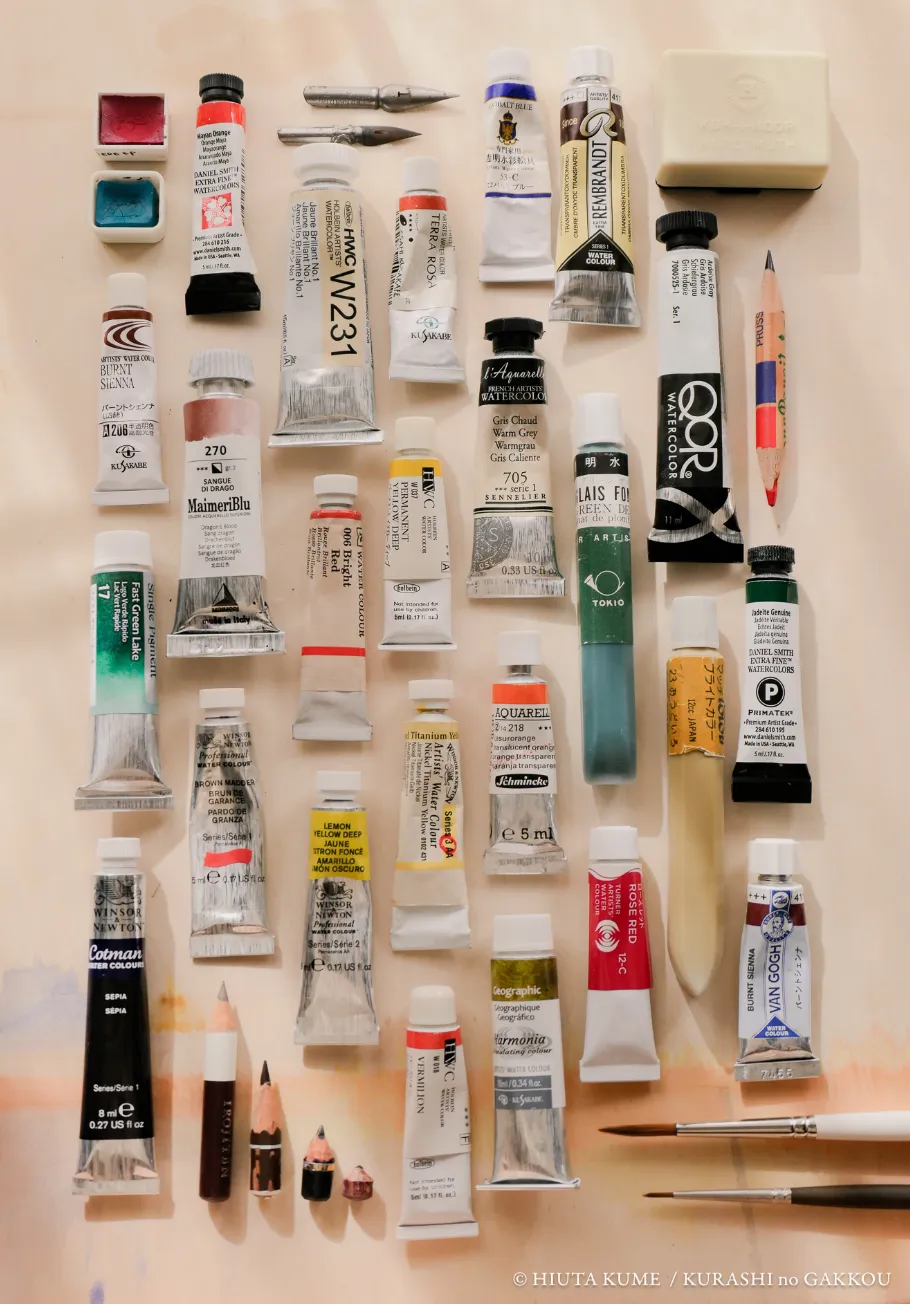
Kurashi no Gakkou: I have loved drawing for as long as I can remember, and one of the things that inspired me to become an illustrator was discovering the beauty of watercolor.
I still prefer working with analog art materials. Even when designing stamps, I like to use analog tools when developing ideas or drawing lines.
I want to preserve the slight, accidental variations that come from the movement of the hand.
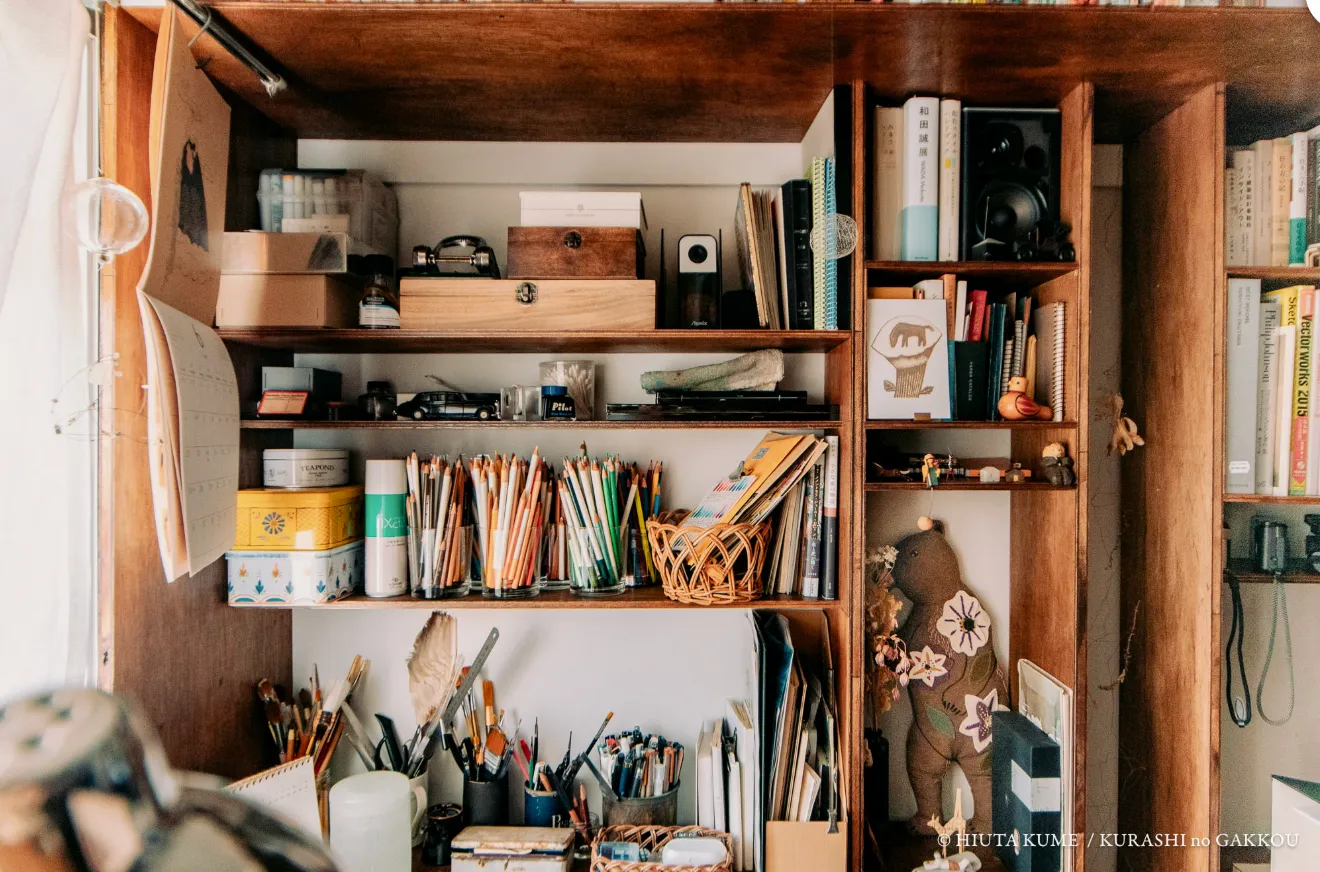
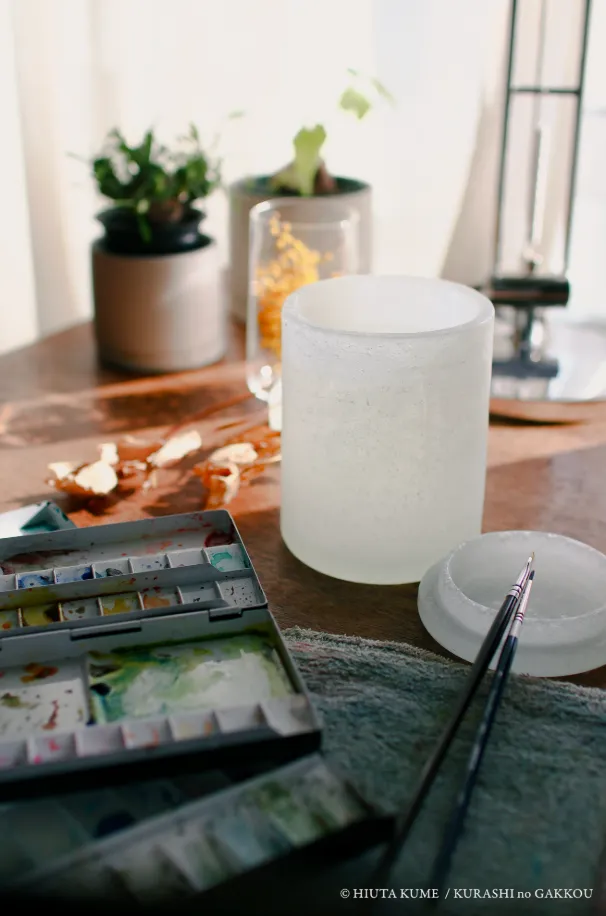
One of my favorite tools is a glass water container that I use when washing paintbrushes or cleaning ink from pens. It was made for me by Kazuki Moriya, a glass artist we have known for some time.
I was once asked to create an illustration for an invitation for one of his exhibitions, and in exchange for the artwork, he made this water container for me.
When light from the window hits the glass, it becomes incredibly beautiful. Sometimes, in the middle of working, I happen to notice it catching the light, and its beauty gives me a little moment of comfort.
Yuka: What is your favorite part of the creative process, and what do you find most challenging?
Kurashi no Gakkou: The time we spend developing ideas is always exciting, no matter what we are making. I also really enjoy the time I spend working with analog art materials.
The difficult part is turning all of those ideas into an actual “product.”
We can expand an idea endlessly in our imagination, but figuring out how to turn that imagination into something that physically exists can be very challenging.
Many types of paper and printing techniques are also gradually disappearing. Sometimes we discover that something we want to make is no longer possible, or that it would require a great deal of time and money. When that happens, it can be quite frustrating.
We often think about how we can continue making things sustainably while keeping them accessible and enjoyable for people.
Stamp making also comes with technical limitations. Sometimes the factory producing our stamps tells us that a particular illustration would be difficult to manufacture and asks us to make adjustments.
In those situations, figuring out how to modify the design without losing the image we originally had in mind can be very difficult.
But when we finally find the right solution—whether it is a production method or a way to adjust a stamp design—it makes us very happy.
Yuka: Among the products available at Cafe Analog, are there any that are especially close to your hearts? Why are they special to you?
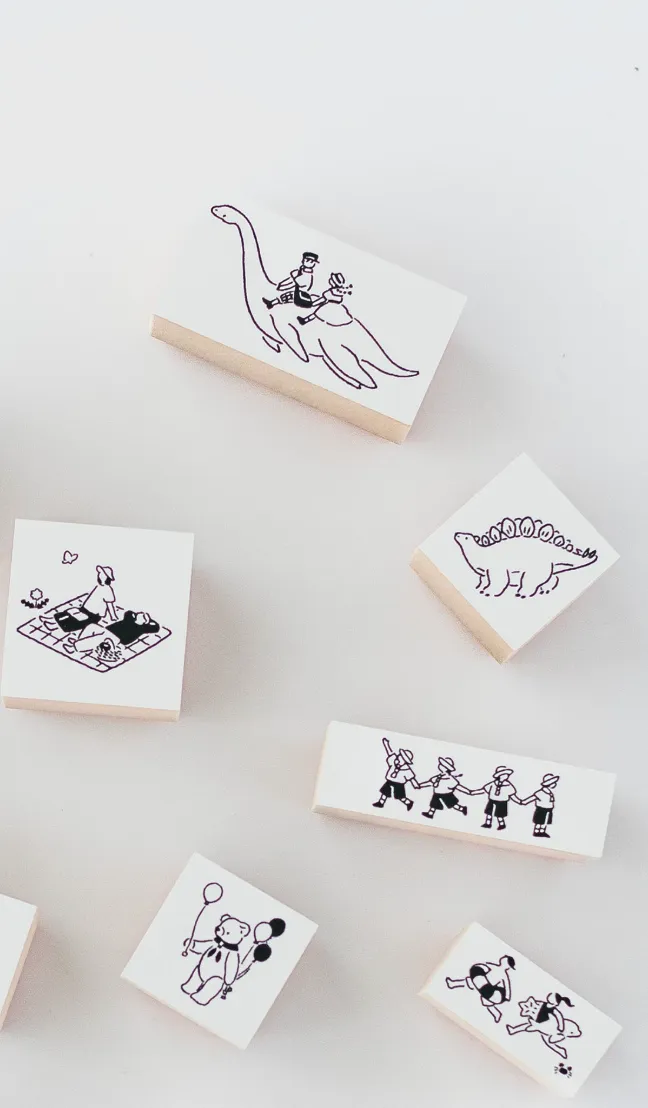
Kurashi no Gakkou: It is difficult to choose because we love all of our stamp designs, but the picnic stamp and the stamp showing small children holding hands are both inspired by scenes from our everyday surroundings.
When cherry blossom season arrives, we often spread out a picnic blanket in the park right next to our home and have a picnic, just like the people in the stamp.
And when we see children from the neighborhood kindergarten walking together hand in hand, it always softens our hearts.
We hope that people using these stamps might feel something similar.
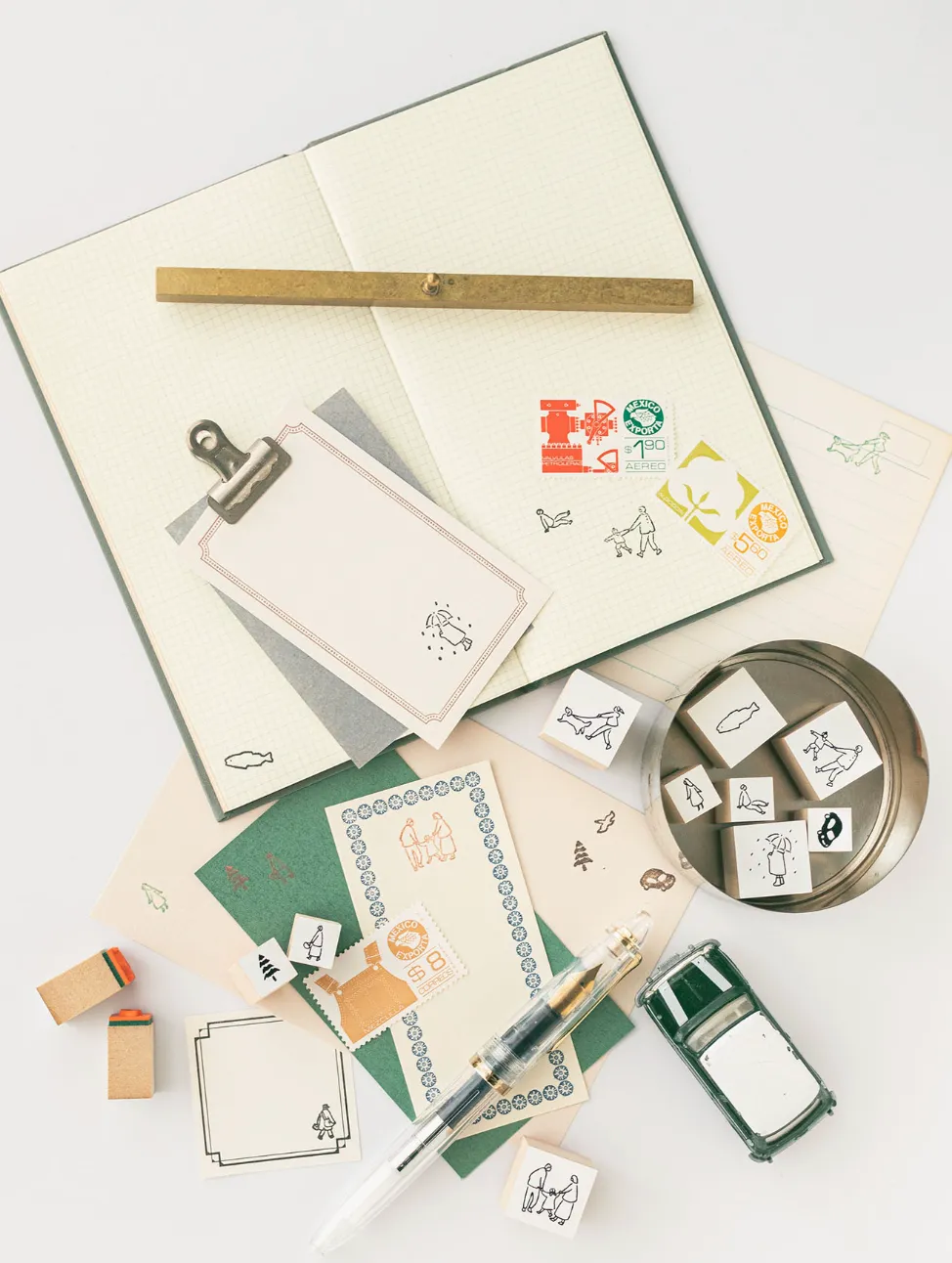
Our stamp series, People You Might See in an Architectural Rendering, originally came from our love of looking at the tiny figures placed inside architectural models.
They are not the main characters, but somehow, their presence makes you happy.
We would be delighted if our stamps could become something like that too.
Yuka: Are there any projects, artworks, or products you would like to create in the future?
Kurashi no Gakkou: We would like to continue adding many different designs to our stamp series.
In addition to People You Might See in an Architectural Rendering, we are currently thinking about designs based on other things we love, such as books and everyday life.
We would also like to make items for letter writing, such as letter sets and stickers.
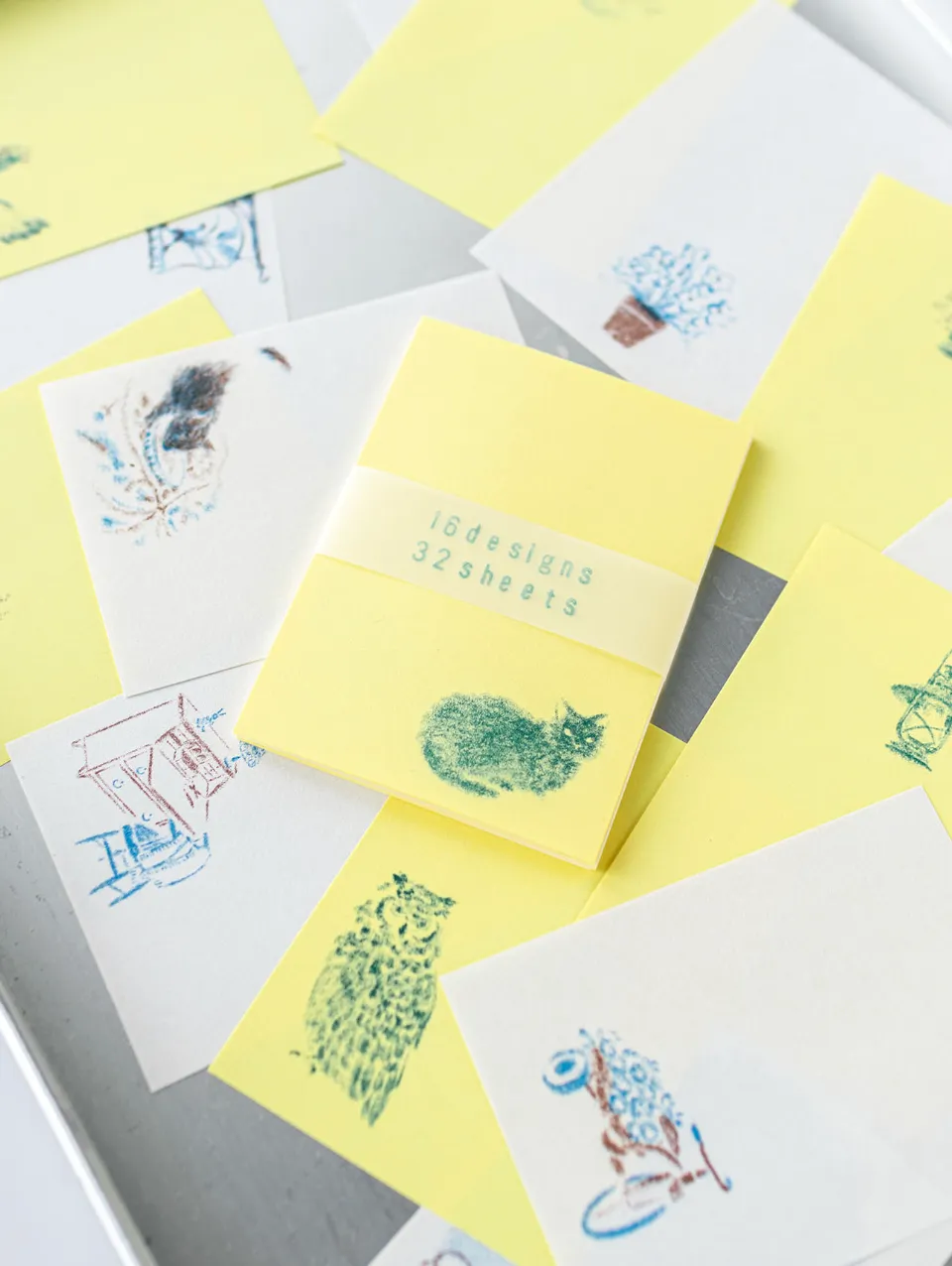
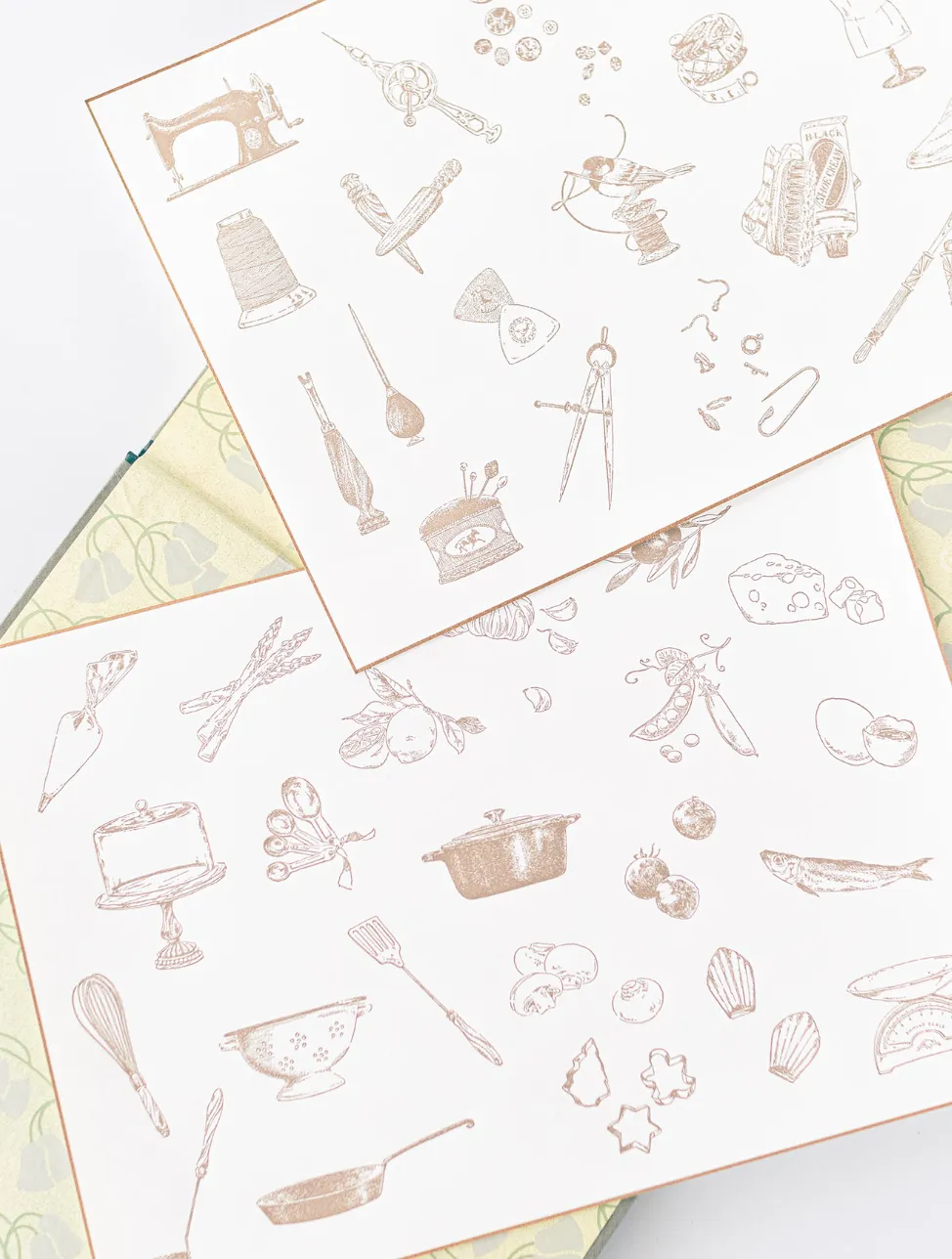
For our paper goods, we have always loved using printing techniques with distinctive character and texture, such as risograph and letterpress printing.
We hope to continue exploring and expanding the possibilities of expression using these techniques in the future.
Yuka: Finally, do you have a message for the Cafe Analog community?
Kurashi no Gakkou: We are very excited to have the opportunity to bring our products to Europe for the first time!
Many of the things we create are inspired by European architecture. We also feel that the love and appreciation for paper goods is something shared by people all around the world.
We would be truly happy if everyone visiting Cafe Analog could enjoy the world we create. And we hope that through our work, you can discover the joy of architecture and the charm of printed matter. Thank you!
Hiuta Kume
https://www.hiuta.net/
Misaki Kume
https://misakikume.com/
Kurashi no Gakkou
https://linktr.ee/kurashino_gakkou
https://www.instagram.com/kurashino_gakkou
***
A big thank you to Hiuta and Misaki from Kurashi no Gakkou for taking part in this interview!
One of the things I find most interesting about Kurashi no Gakkou is that it all started with architecture. I also love that Hiuta and Misaki bring their different backgrounds as an illustrator and an architect together to create something as a husband-and-wife team.
Hiuta’s illustrations are often inspired by people and scenes from everyday life, and I think this is what makes the little figures in her work feel so lively and familiar. I also love discovering all the tiny details she carefully puts into her illustrations.
And I have to mention their little library! With its arched doorway, low ceiling, and walls filled with books, it looks almost like a secret hideaway. After hearing how much inspiration they find in books, old objects, architecture, and the everyday world around them, it was lovely to see the kind of space where many of these ideas begin.
I especially liked hearing the story behind the little people in their stamps. As Hiuta and Misaki described them, they are not the main characters, but their presence somehow makes you happy. I think that describes their stamps perfectly.
I hope these little people will find their way into your journals, letters, and everyday life too!

Comments (0)